Not therapy. Not motivation. A practical system that helps young people regulate reactions, trust their own judgement, and act with more choice — instead of running on autopilot.
Stress → overwhelm → escape. Doubt → hesitation → shrinking. Fear → avoidance → staying stuck. Each book targets one loop — but they're all connected.
Flatness → withdrawal → autopilot. ↗ Stay in the Game
Stress → overwhelm → escape. ↗ Calm Reset
Doubt → hesitation → shrinking. ↗ Confidence Stand
Fear → avoidance → staying stuck. ↗ Courage Move
What's missing for most young people isn't information. It's the structured repetition that takes something they've heard of and installs it as something they can actually do under pressure, in the moment, when it counts. That's what each book builds.
"Practical, unfussy, and mercifully free of the kind of earnest over-explaining that makes most books aimed at teenagers unappealing to actual teenagers."
— Linda Miller, Registered Psychologist & Mindset Coach, on Calm Reset (Book 1)
The books are short — 50 to 70 pages, designed to read in a single sitting. Each one installs one capacity. Together they build a system.
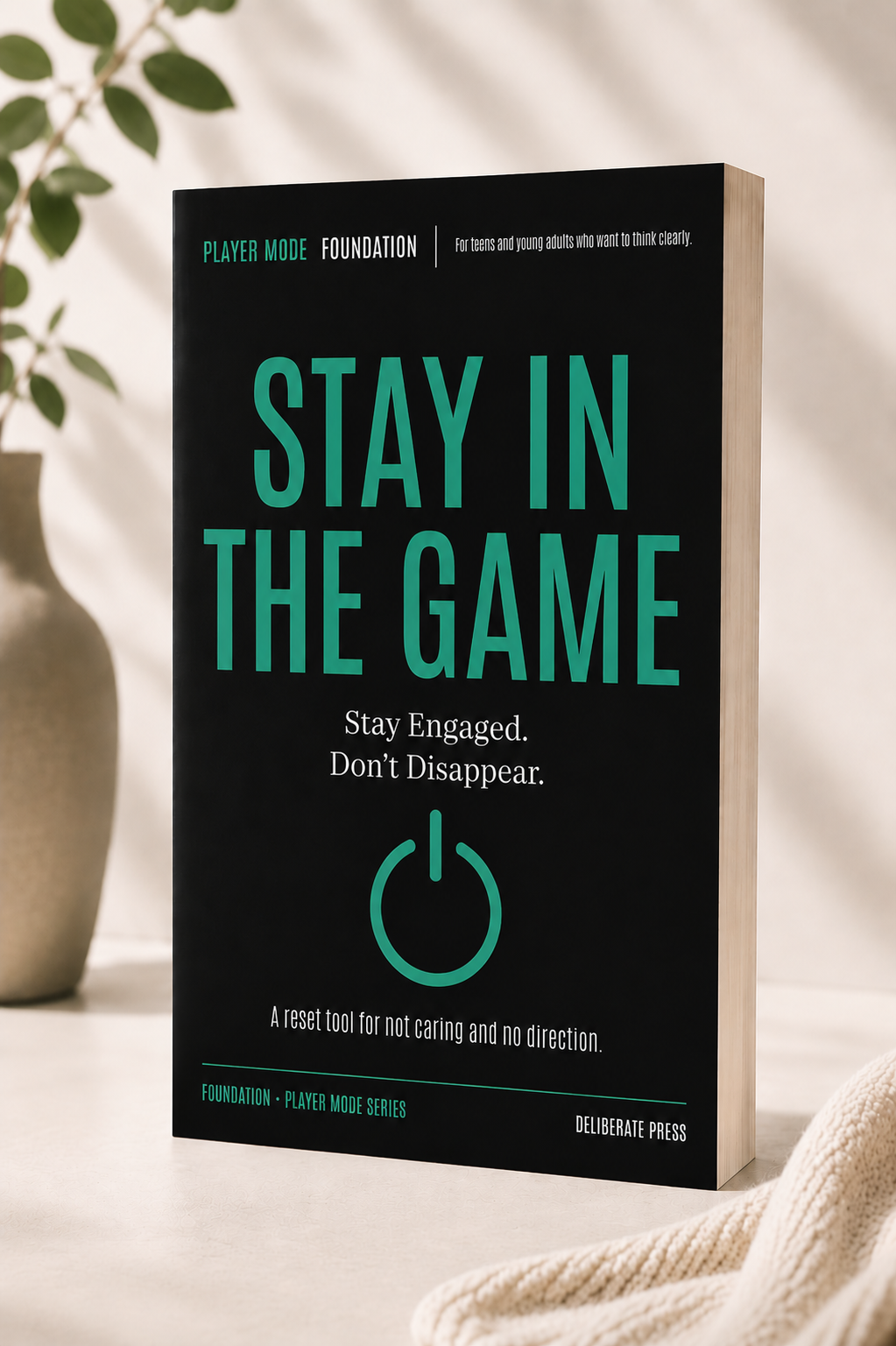
Stay Engaged. Don't Disappear.
For when everything feels flat and disconnected. Builds the steadiness to stay engaged instead of disappearing into autopilot.
"I can stay."
Available on Amazon ↗
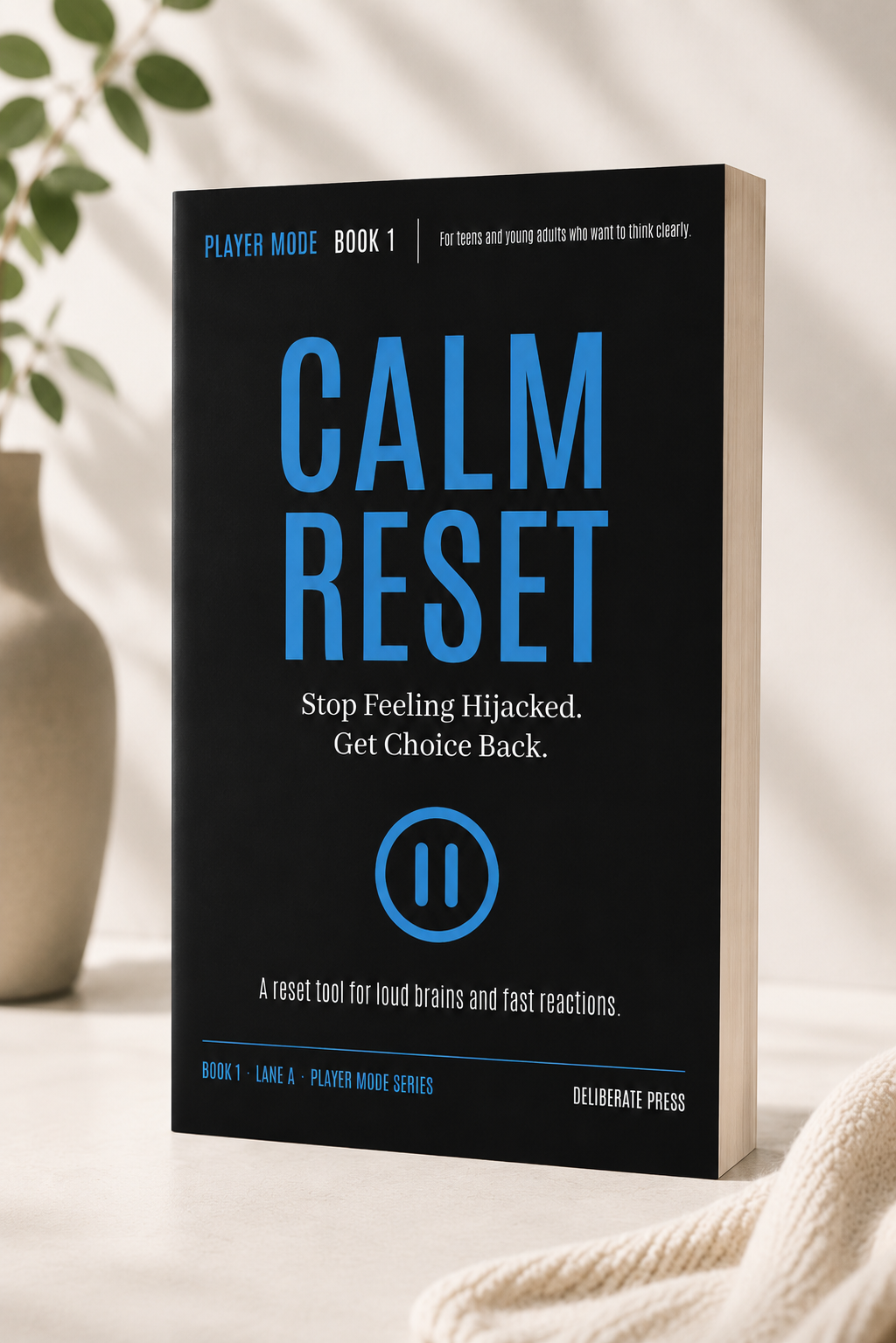
Stop Feeling Hijacked. Get Choice Back.
Interrupts stress, overwhelm, and overthinking loops before reactions take over. Builds the ability to settle the system and choose a response.
"I can calm my system."
Available on Amazon ↗
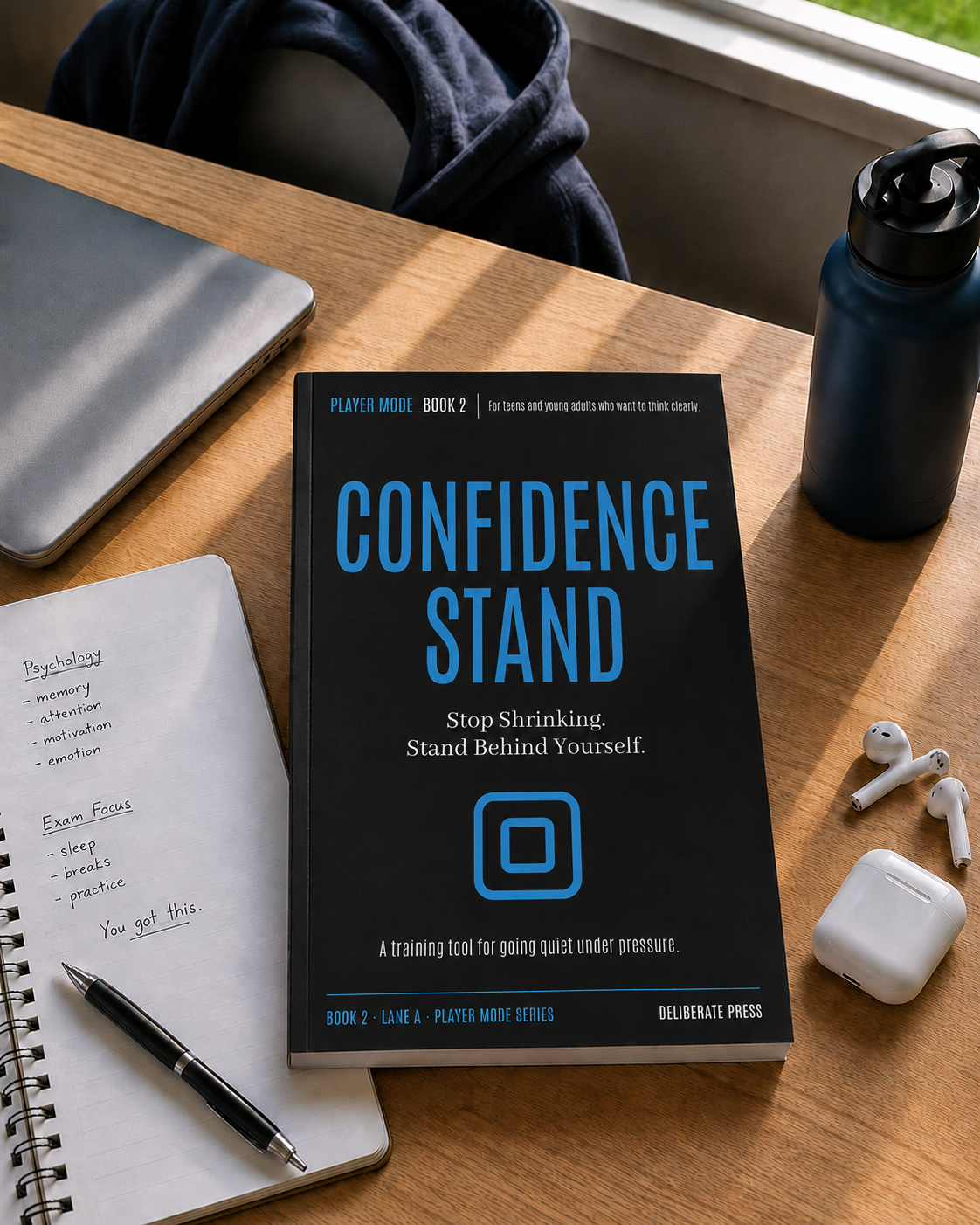
Stop Shrinking. Stand Behind Yourself.
Builds the ability to handle doubt, pressure, and comparison without shrinking. Trains standing behind your own read instead of outsourcing it.
"I can stand behind myself."
Available on Amazon ↗
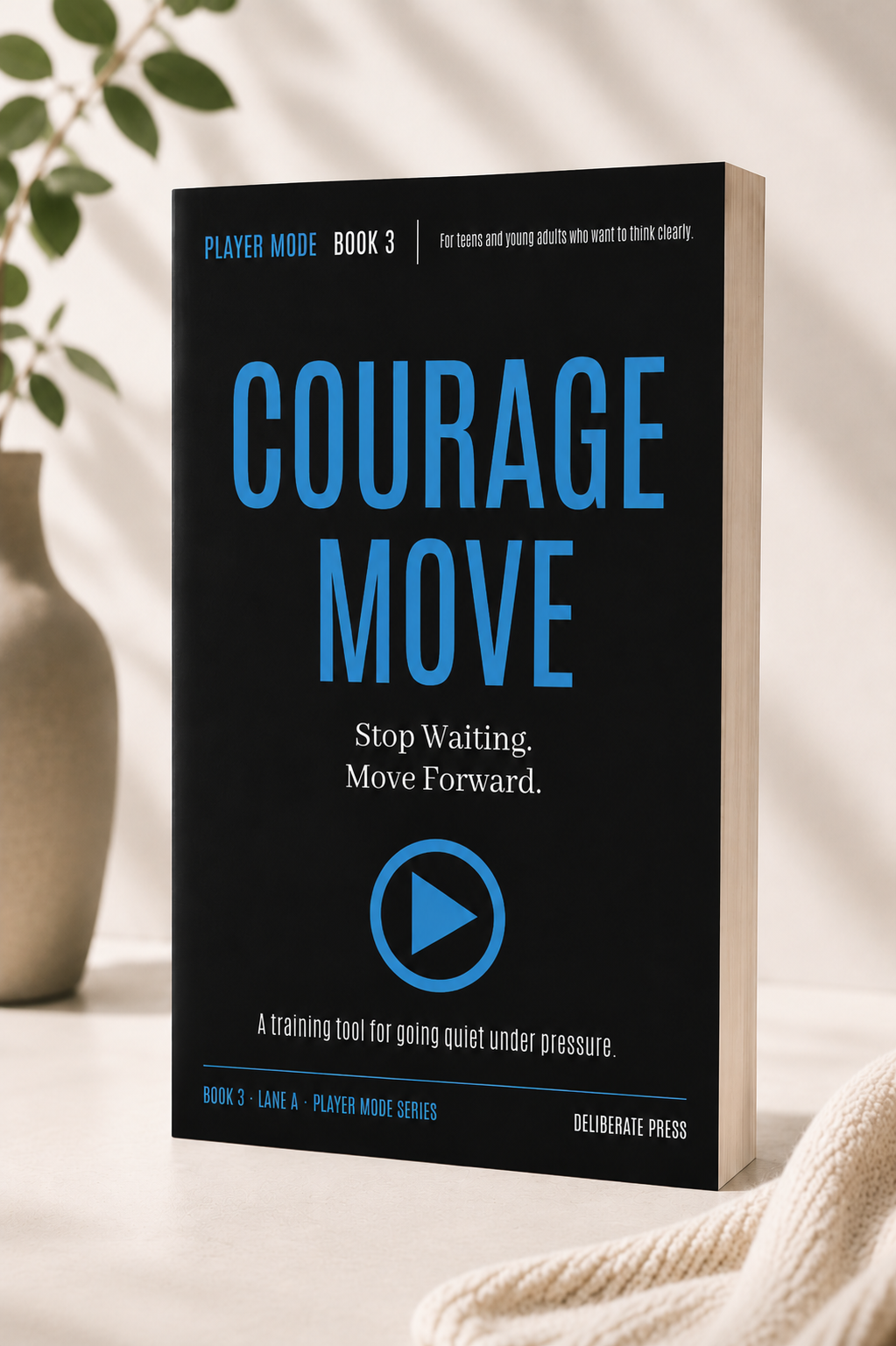
Stop Waiting. Move Forward.
Helps young people act before they feel fully ready — interrupting avoidance, delay, and hesitation. Movement before certainty.
"I can move forward."
Available on Amazon ↗
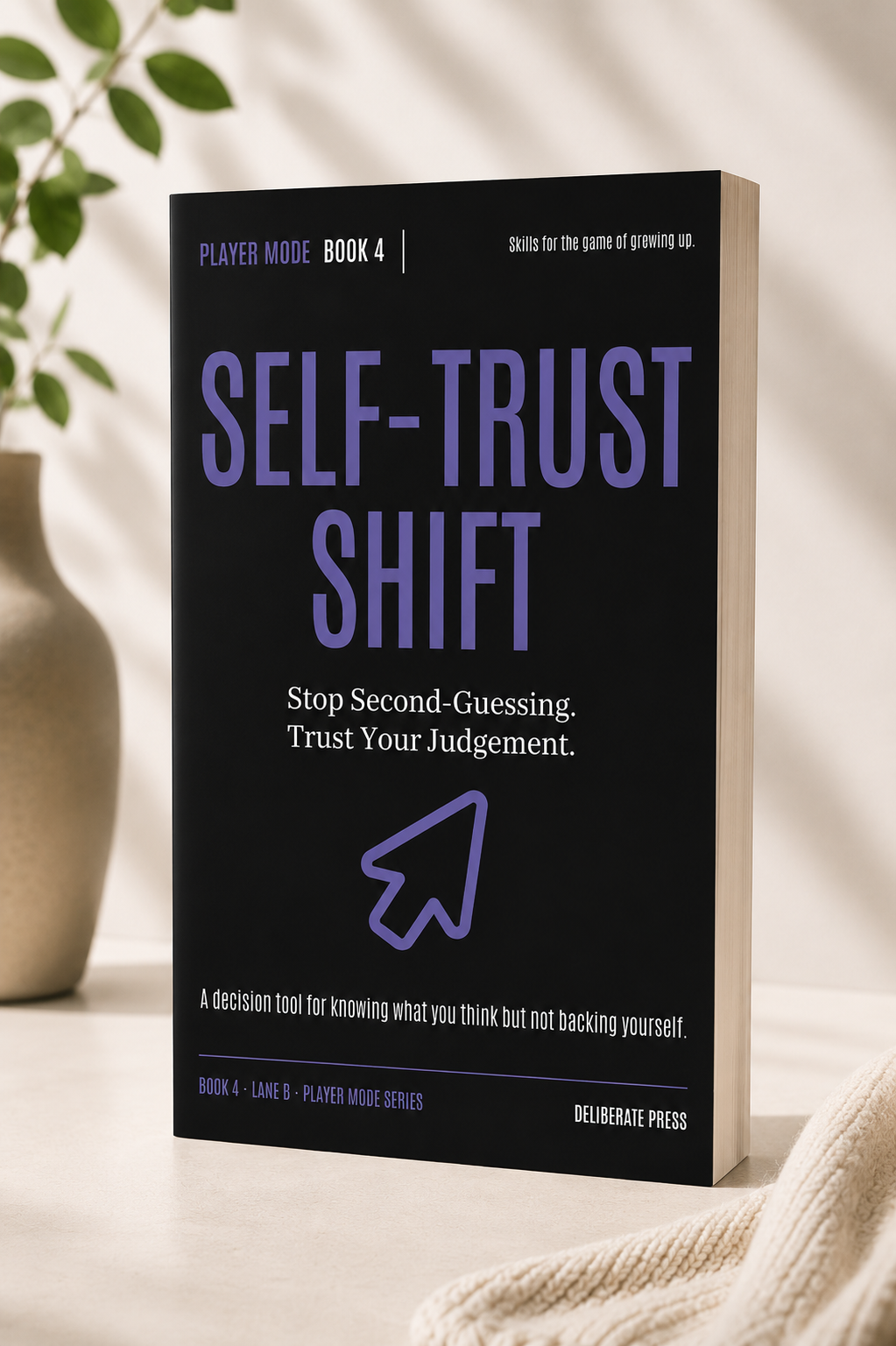
Stop Second-Guessing. Trust Your Judgement.
Interrupts hesitation and the habit of outsourcing decisions before testing your own read. Builds the ability to act on internal signal rather than external approval.
"I trust my judgement."
Available on Amazon ↗
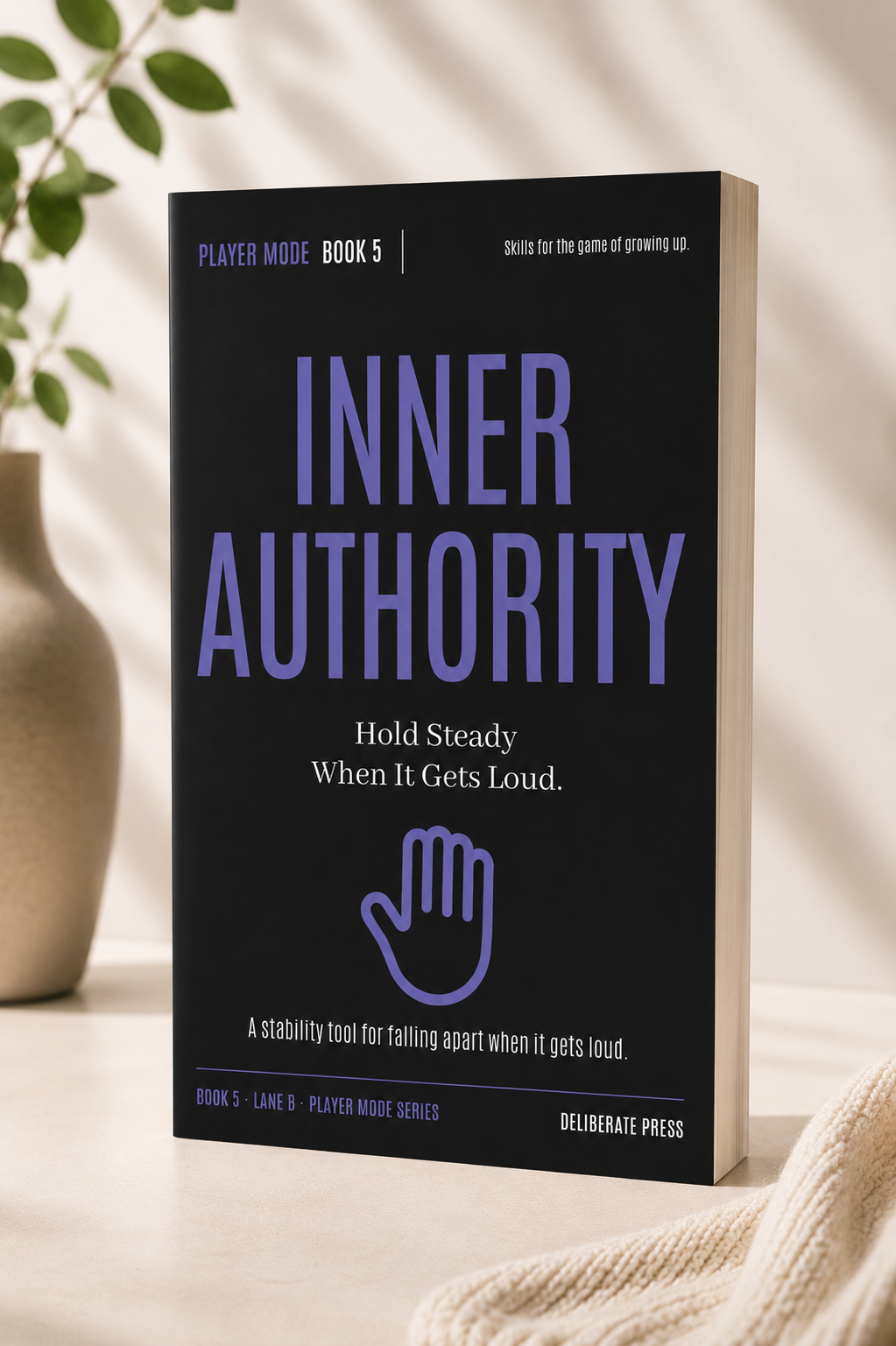
Hold Steady When It Gets Loud.
Builds psychological stability when other people or group dynamics are the destabilising force. Helps young people hold their ground without aggression or collapse.
"I hold under pressure."
Available on Amazon ↗
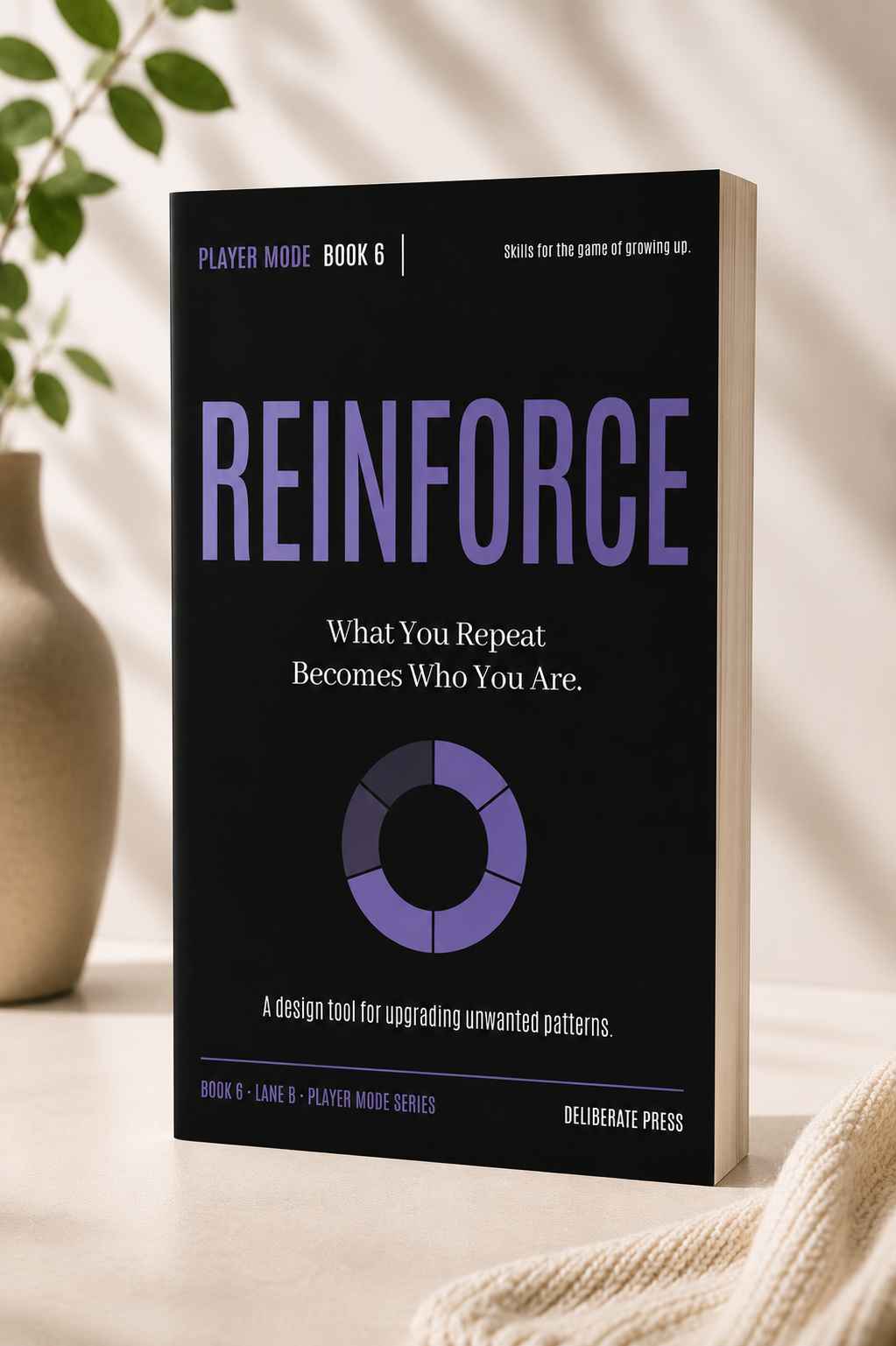
What You Repeat Becomes Who You Are.
Consolidates identity work through deliberate daily choices — recognising which version of yourself is being built by what you repeatedly do.
"I choose who I reinforce."
Available on Amazon ↗The System Is Yours. Run It Deliberately.
The earlier books built individual capacities. This one runs them together. For the moment when you step back and ask: is the overall picture actually what I'd choose?
"I run my system deliberately."
Stay engaged → Calm the system → Stand behind yourself → Move forward
→ Trust your judgement → Hold under pressure → Choose who you reinforce
→ Run it deliberately

The series wasn't written in isolation and shipped. Early drafts were tested with teenagers who fit the actual target profile, and anything adult-coded, over-explained, or condescending was cut. Parents, teachers, and a school counsellor reviewed it for appropriateness and practical use. A registered psychologist and mindset coach formally endorsed Book 1.
What that process consistently showed: teenagers engaged with it precisely because it didn't ask them to identify as struggling. The series positioned itself outside therapeutic framing — not as a fix for what was broken, but as a skill system for the game itself.
The companion logs — where the daily practice happens — were identified as the highest-value part of the whole system. It's in the logs where the skill actually installs, through daily practice rather than reading alone.
The series is self-directed by design. Young people stay in charge of the process. It works without a facilitator — but it sits naturally alongside pastoral care, school counselling, and youth work.
Early reader access
If you're a teacher, counsellor, youth worker, or parent — email arc@deliberatepress.com with the subject line ARC list and we'll send you future Player Mode books before they launch.
arc@deliberatepress.com
I built the Player Mode series because I kept watching young people get stuck in patterns they didn't choose and didn't know how to interrupt. Drift. Reactivity. Avoidance. Self-doubt. These aren't character flaws — they're autopilot running unchecked.
A decades-long immersion in behavioural science, coaching, and human performance research made one thing clear: the tools exist. Most young people just don't have access to them in a form they can actually use. That's what this series is.
General enquiries — hello@deliberatepress.com
Schools & institutions — hello@deliberatepress.com
Early reader list — arc@deliberatepress.com